Article
Beyond FTP: Why 2026 is the Year of Multi-Dimensional Cycling Fitness
![[HERO] Beyond FTP: Why 2026 is the Year of Multi-Dimensional Cycling Fitness](https://cdn.marblism.com/tc4DKKMwruG.webp)
Let’s be real: we’ve all been there. You spend six weeks grinding through a structured cycling training plan, sweating buckets in your pain cave, all for that one glorious (or terrifying) Tuesday. It’s FTP test indoor cycling day. You warm up, you suffer for twenty minutes, and the number pops up. Maybe it went up five watts. Maybe it stayed the same.
But here’s the kicker, even if that number went up, why did you still get dropped on the local group ride when the pace surged? Or why did you crumble during that third-to-last interval on your Sunday long ride?
The truth is, as we roll through 2026, the cycling world is finally waking up. Functional Threshold Power (FTP) isn't dead, but it is no longer the king. It’s just one piece of a much larger, much cooler puzzle. Welcome to the era of multi-dimensional cycling fitness. At VeloWorkout, we’re moving beyond the "one number" obsession to help you build a body that’s fast, resilient, and, most importantly, inevitable.
The Problem with the "Single Number" Obsession
For years, FTP has been the gold standard. It’s easy to understand: it’s your "hour power." It sets your zones. It’s the metric we use to brag (or complain) on Discord. But focusing solely on FTP is like judging a car’s performance based only on its top speed. It doesn't tell you how fast it accelerates, how it handles corners, or how many miles it gets to the gallon.
In 2026, indoor cycling workouts have evolved. We’ve realized that two riders with the exact same FTP can be completely different athletes. One might be a diesel engine who can sit at 300W for hours but can’t sprint to save their life. The other might be a crit-crushing rocket who can hit 1,000W ten times in a row but fades the moment a climb lasts longer than five minutes.
If your training only targets FTP, you’re leaving massive performance gains on the table. You’re building a lopsided athlete.

Dimension 1: Aerobic Capacity (The Engine Room)
Your aerobic capacity is the foundation of everything you do on the bike. Think of it as the size of your engine. A higher FTP is great, but a deep aerobic base, often built in those "boring" Zone 2 sessions, is what allows you to clear lactate, burn fat efficiently, and keep your heart rate stable when the pressure is on.
Many riders skip this because it doesn't feel "hard enough." But in 2026, the pros and the smartest amateurs are doubling down on "Low and Slow" to go "Fast and Far." This is where you build the mitochondria that power your performance.
Master your base: Tackle a session like the Endurance Ride to build that steady-state engine without burning out your nervous system.
Dimension 2: Anaerobic Power (The Snap)
This is your ability to go "Full Gas." It’s the "snap" you need to close a gap, the punch to get over a 30-second kicker, and the raw speed for the final sprint.
Your FTP doesn't measure this. You could have a world-class FTP and a garbage anaerobic capacity. If you want to be a complete rider, you need to train your body to handle those high-intensity, "eye-bleeding" efforts. This isn't just about max power; it’s about teaching your muscles to produce force when the oxygen runs out.
Ignite the fire: Try the Hard Starts 5x4. These workouts are designed to spike your power and then force you to settle into a high-threshold effort, classic multi-dimensional training.
Dimension 3: Repeatability (The "Do It Again" Factor)
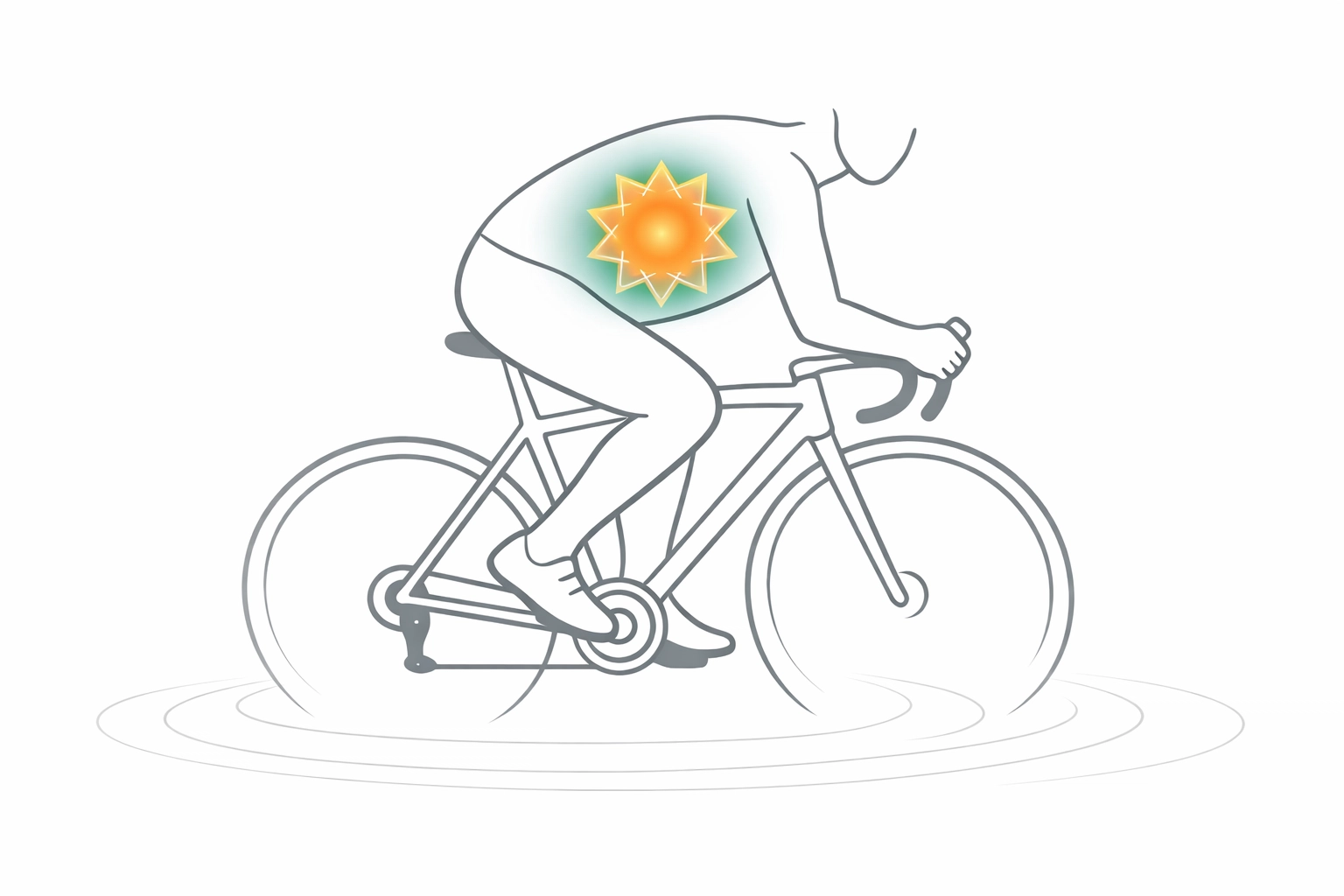
Here is where most training plans fail. Can you produce 400W? Great. Can you do it 15 times after two hours of racing? That’s repeatability.
In the real world, it’s rarely the highest FTP that wins. It’s the rider who can recover the fastest between surges. Repeatability is the bridge between your aerobic base and your anaerobic peak. It’s about how quickly your body can "flush out the fatigue" and go again.
At VeloWorkout, we use our Analytics to track how your power degrades over a session. If your fifth interval looks significantly worse than your first, we know exactly what we need to work on. It’s not about doing more work; it’s about doing better work.
Dimension 4: Tech Synergy (The 2026 Secret Sauce)
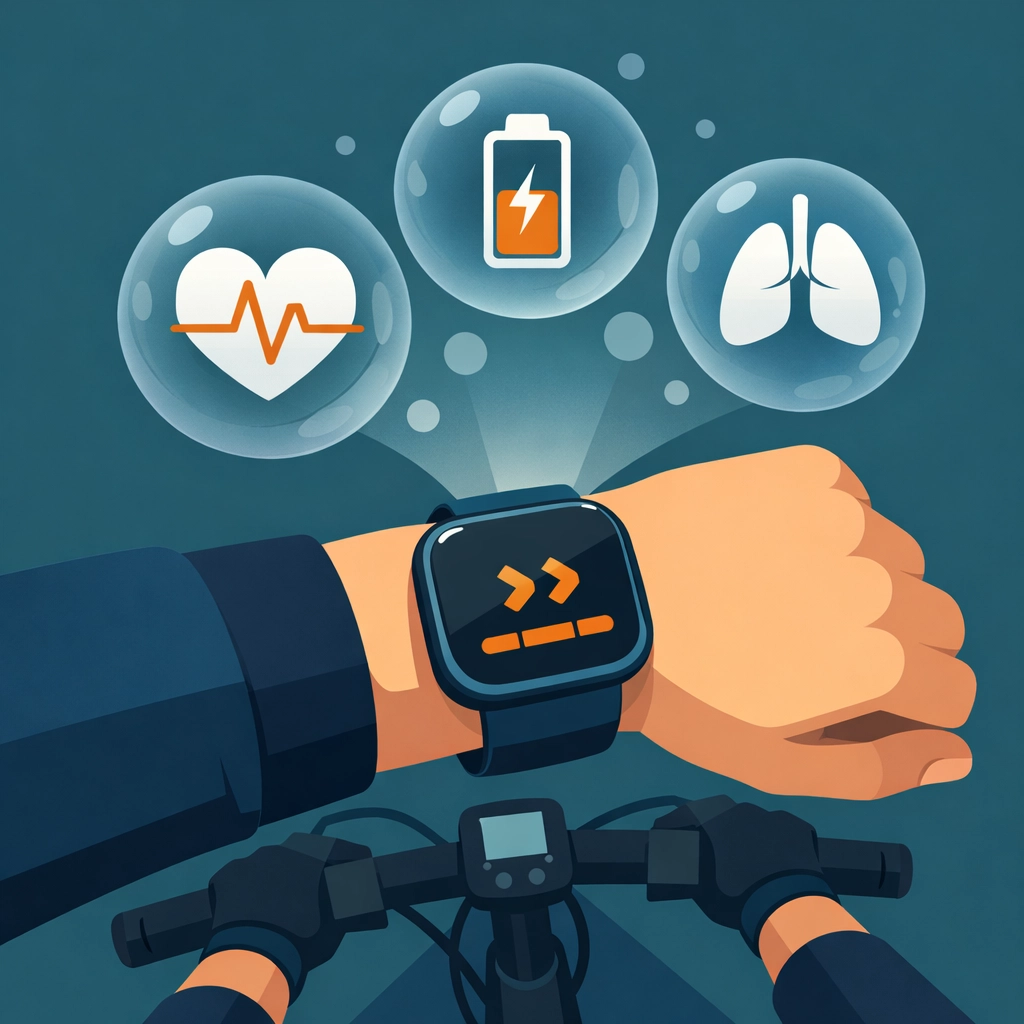
We can’t talk about 2026 without talking about wearables. Gone are the days of just staring at a power meter. Today, we’re integrating Heart Rate Variability (HRV) and recovery data into the mix.
Your structured cycling training plan should be a living thing. If your Garmin tells you your recovery is in the tank and your HRV is plummeting, smashing a VO2 Max session is just a recipe for injury or overtraining. Multi-dimensional fitness means listening to your body’s data to decide whether today is a day for the Sweet Spot Surprise or a gentle spin to flush out fatigue.
How VeloWorkout Makes Progress Inevitable
We didn't build VeloWorkout to be another "me too" platform. We built it for the athletes who want to understand the why behind the watt.
1. The Analyzer: Your Digital Director Sportif
Our Analyzer tool doesn't just give you a graph of your ride. It breaks down your "Power Profile." It identifies your strengths (maybe you’re a natural sprinter) and exposes your weaknesses (maybe your 10-minute power is lacking). Instead of guessing, you get a clear roadmap of which dimensions of your fitness need the most love.
2. The Builder: Craft Your Own Success
Every rider is a "N of 1." Your schedule, your goals, and your physiology are unique. That’s why our Workout Builder is so powerful. You aren't stuck with a "one size fits all" plan. Want to build a session that specifically targets repeatability while maintaining your base? You can drag, drop, and design it in seconds.
3. The Library: Science-Backed Suffering
If you don't want to build from scratch, our Library is packed with workouts designed by experts to hit every dimension of fitness. From Tempo Continuous for that metabolic efficiency to SST 3x15 for building that muscular endurance, we’ve got the tools to make you dangerous.

Stop Testing, Start Training
The FTP test indoor cycling cycle can be a trap. If you're constantly testing, you're not training. In 2026, we use "threshold" as a guide, not a destination.
Shift your focus. Ask yourself:
- Is my endurance improving? (Can I stay in Zone 2 longer with a lower HR?)
- Is my repeatability up? (Can I handle that 5th interval better than last week?)
- Is my recovery faster? (Does my HRV bounce back after a hard block?)
When you start answering "yes" to those questions, your FTP will naturally follow. It’s a side effect of being a well-rounded, multi-dimensional athlete.
Your Next Move
Ready to stop chasing a single number and start building real-world speed?
- Check your stats: Dive into your VeloWorkout Analytics and see where your "gaps" are.
- Diversify your rides: Don't just hunt PRs every day. Mix in some Zone 2 Torque and some Long Rides.
- Build the future: Head over to the Builder and create a session that scares you: just a little bit.
The era of the one-dimensional cyclist is over. 2026 is about the engine, the snap, and the stamina. Let’s get to work.
Ride on.
Want to learn more about our journey? Check out our history or see what we're all about.
Turn your training plan into actual progress
Build workouts, execute with smart trainer support, and track performance with data that matters.
Open VeloWorkout