Article
How to Turn Your Strava Data into Smarter Indoor Cycling Workouts
![[HERO] How to Turn Your Strava Data into Smarter Indoor Cycling Workouts](https://cdn.marblism.com/osBYbwZIBSD.webp)
You finish a ride, your head unit beeps, and seconds later, the notification hits: “Your ride is ready.” You open Strava, check your segments, maybe give a few kudos, and close the app. Job done, right?
Wrong.
For most cyclists, Strava is a digital trophy cabinet. It’s a place to store memories, miles, and the occasional PR. But if you want to actually get faster, if you want to see your FTP climb and your endurance explode, you need to stop treating your data like a scrapbook and start treating it like a blueprint.
Passive tracking tells you where you’ve been. Active training tells you where you’re going. To bridge that gap, you need to turn those raw files into a structured cycling training plan. At VeloWorkout, we don’t just want you to collect data; we want you to weaponize it.
Here is how you move from "just riding" to "training with intent" by turning your Strava history into elite-level indoor cycling workouts.
The Data Trap: Mirror vs. Map
Most riders are stuck in the "Data Trap." They have years of power files, heart rate charts, and elevation gains sitting in the cloud, but they aren't using any of it to inform their next session.
Think of Strava as a mirror. It shows you what you look like right now, your current fitness, your recent efforts, and your top speeds. It’s great for reflection, but a mirror can’t show you the way forward. For that, you need a map.
A cycling workout plan is that map. When you sync your Strava data with VeloWorkout, you stop looking at the past and start engineering the future. You move from "I hope I get faster" to "I know I’m getting faster because my cycling performance analytics prove it."
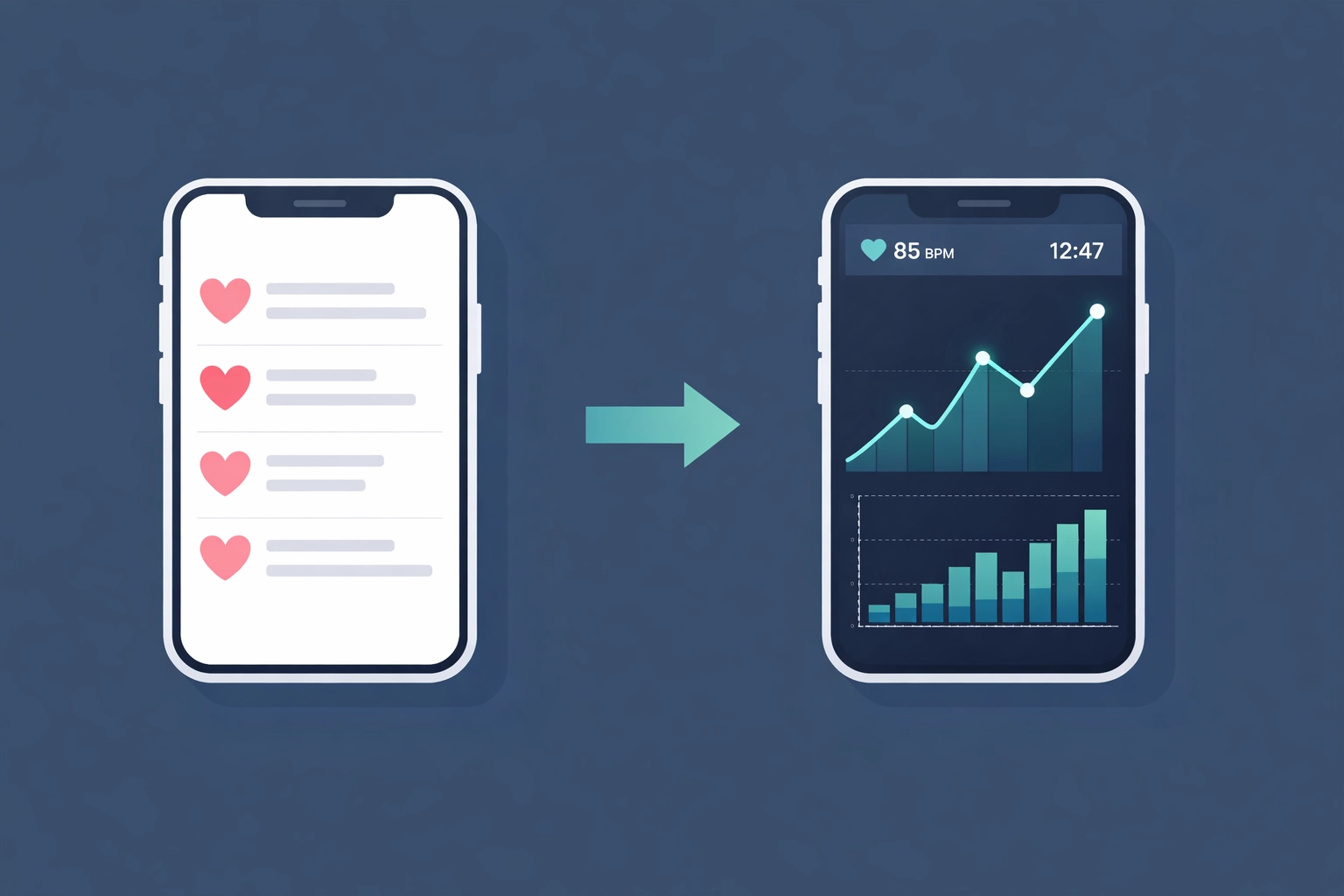
Caption: Move from passive scrolling to active performance tracking.
Step 1: Connecting the Dots
First things first: you need a clean pipeline. Strava is excellent at aggregating data from your Garmin, Wahoo, or phone, but it’s not designed to build workouts.
Connect your accounts. Sync your Strava history to VeloWorkout. This isn't just about seeing your mileage; it’s about letting the engine analyze your "Normal" load. By pulling in your outside rides, VeloWorkout understands your true fatigue levels and current capabilities.
If you’ve been smashing 100-mile weekend rides but your indoor sessions are too easy, the data will show the disconnect. Conversely, if you're overtrained and your heart rate is redlining on recovery days, the analytics will flag it before you burn out.
Step 2: Decoding Your Cycling Performance Analytics
Once your data is flowing, you need to look at three specific pillars: Load, Intensity, and Readiness.
1. Training Load: The Invisible Weight
Every ride has a "cost." In the world of performance, we call this Training Stress Score (TSS). Strava gives you a "Relative Effort" score, but you need to translate that into a progressive load. If your weekly load is flatlining, your fitness will too. Use your analytics dashboard to ensure your weekly volume is trending upward in a sustainable, "block-by-block" fashion.
2. Intensity: Not Every Mile is Equal
Are you spending 90% of your time in "No Man's Land" (Zone 3)? This is the biggest mistake amateur cyclists make. It’s too hard to be recovery, but too easy to trigger real physiological change. Analyze your Strava power curves. If they look like a flat plateau, your indoor cycling workouts need more polarization. You need sessions that are "short and sharp" and sessions that are "long and steady."
3. Readiness: Listen to the Data, Not Just Your Legs
Sometimes your mind says "Go," but your data says "No." By tracking your recent acute load against your long-term chronic load, you can see if you are actually ready for a high-intensity interval session. If your readiness score is in the tank, swap that VO2 Max blast for a recovery spin in the VeloWorkout library.
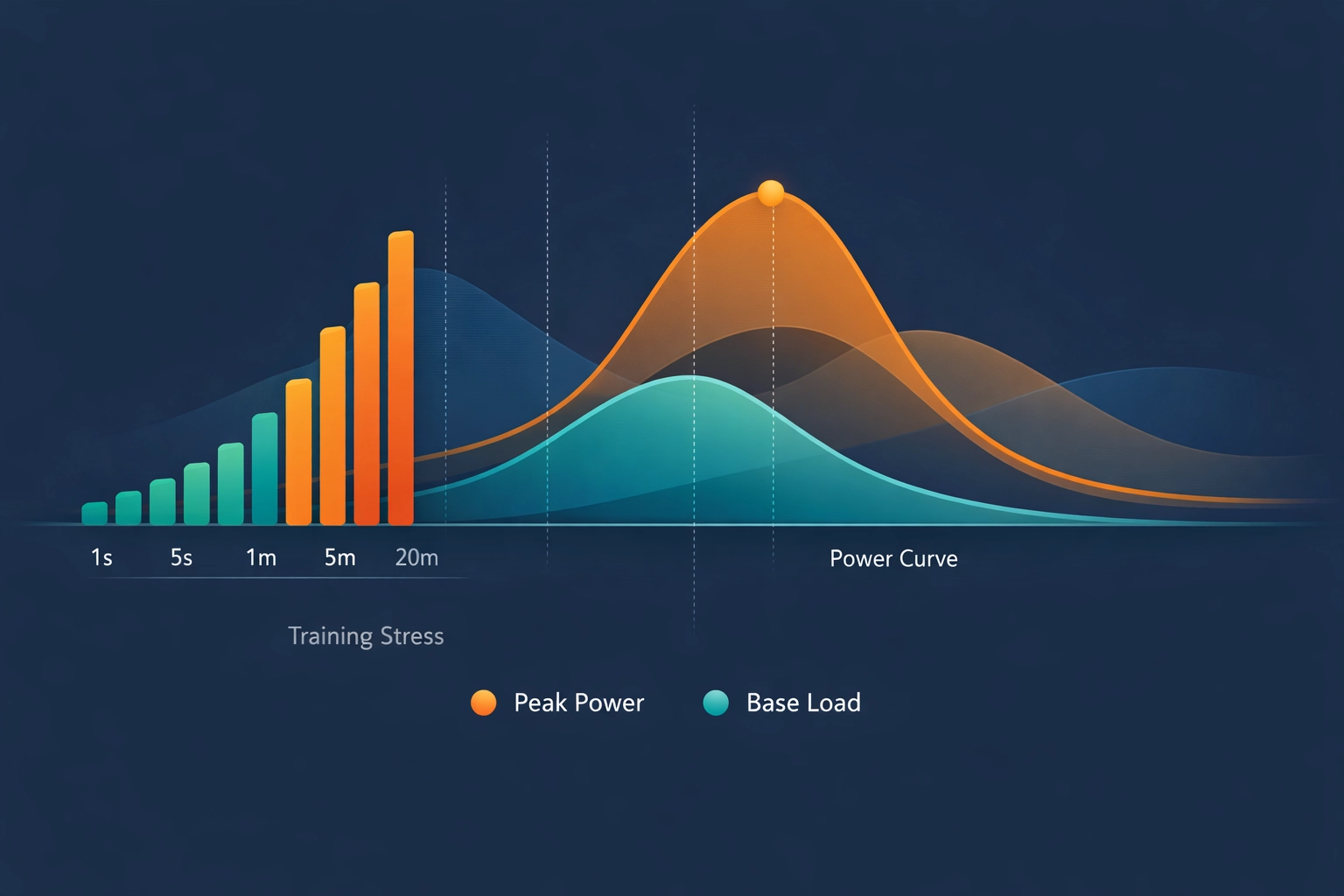
Caption: Deep dive into the metrics that actually move the needle.
Step 3: Crafting Your Structured Cycling Training Plan
Now for the fun part: turning that analysis into action. You don’t need a degree in sports science to build a pro-level session.
Define your goal. Based on your Strava data, where are you weak?
- Low Peak Power? Build a sprint interval set.
- Failing on 20-minute climbs? Focus on Sweet Spot progression.
- Burning out after 2 hours? Focus on Zone 2 aerobic base.
Use the Workout Builder. Instead of picking a random video on YouTube, use the VeloWorkout Builder to create a session tailored to your current FTP. If your Strava data shows you’ve recently bumped your 10-minute power, adjust your intervals accordingly.
Keep it structured. A structured cycling training plan isn't about riding hard every day; it’s about riding with a specific purpose. If Tuesday is "Interval Day," make those intervals hurt. If Wednesday is "Recovery," keep the pedals turning with zero resistance.
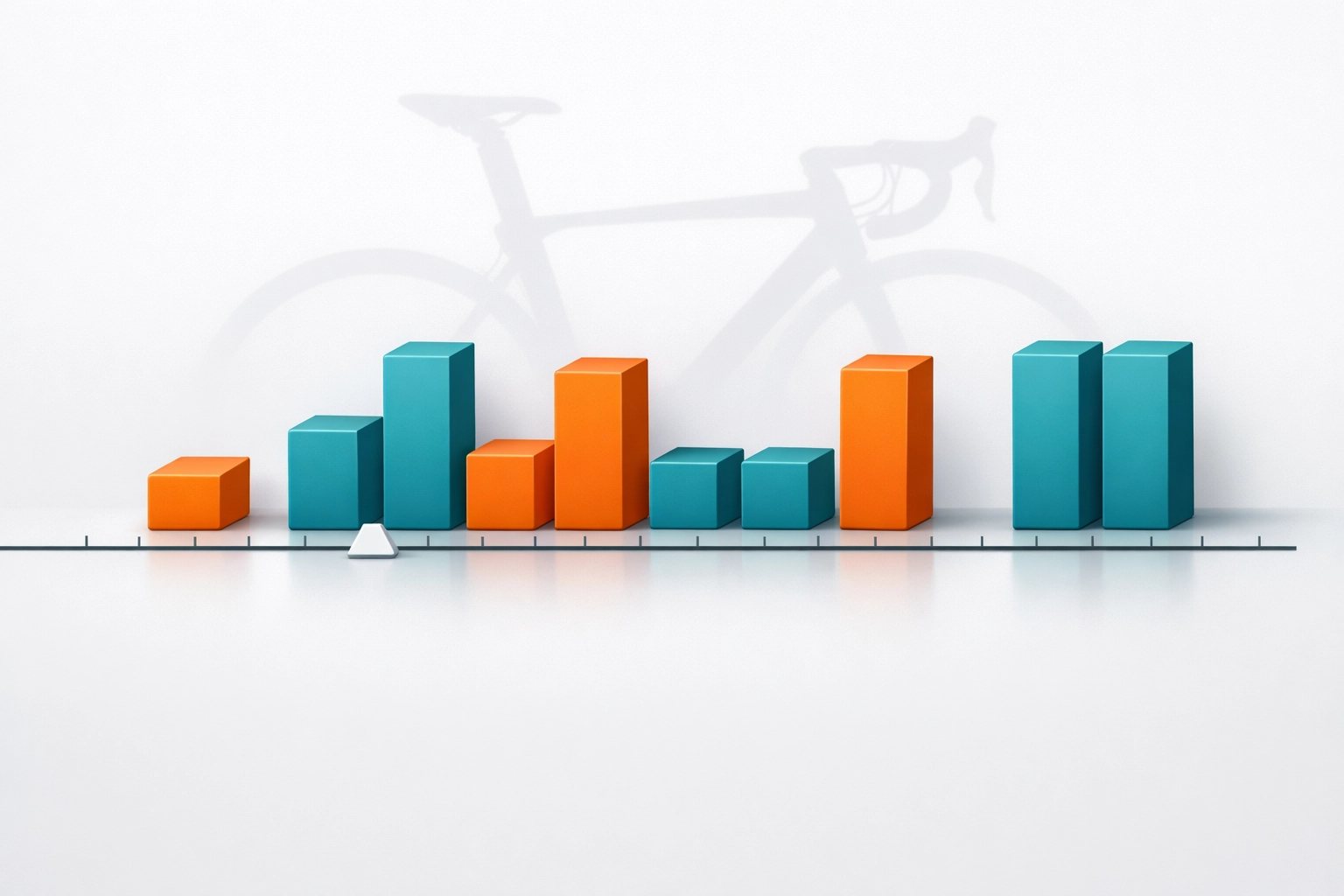
Caption: Use the VeloWorkout Builder to turn data into targeted interval blocks.
Step 4: The 10-Minute Sunday Workflow
To make this sustainable, you need a workflow. High-performance training shouldn't feel like a second job. Follow this simple Sunday routine to turn your Strava "junk miles" into a high-octane cycling workout plan:
- Review the Week (3 Mins): Open your VeloWorkout analytics. Did you hit your target TSS? Did you spend enough time in your target zones?
- Check Readiness (2 Mins): How do your legs feel compared to what the fatigue chart says? If you’re deeply fatigued, plan a "Down Week."
- Schedule the "Big Rocks" (3 Mins): Pick two "Key" indoor sessions for the coming week: the ones that will actually make you faster. Maybe it’s a VO2 Max session and a Threshold block. Build them or select them from our plans.
- Sync and Prepare (2 Mins): Ensure your smart trainer is ready to go. Eliminate the friction. When Tuesday morning rolls around, you shouldn't be deciding what to do; you should already be doing it.
Why VeloWorkout Beats the "Manual" Way
You could try to do all of this in a spreadsheet. You could manually calculate your TSS, guess your zones, and use a stopwatch to time your intervals. But why would you?
We built VeloWorkout to be the "no-nonsense" engine for people who value their time. If you’re looking for a free alternative to TrainerRoad, you’ve found it. We provide the tools to take the data you’re already collecting and turn it into the progress you’ve been chasing.
Stop being a passive observer of your fitness. Strava told you what you did today. Now, let VeloWorkout tell you what you’re capable of tomorrow.
Caption: The VeloWorkout dashboard: your command center for indoor performance.
Tackle the Plateau Today
Data is only power if you know how to use it. Your Strava profile is sitting on a goldmine of insights that can transform your indoor cycling workouts from boring chores into precision-engineered performance boosters.
Discover the difference of a structured cycling training plan.
Craft your next session.
Flush out the fatigue.
Build sustainable power.
The road to your next PR doesn't start on a segment; it starts in your training lab. Let’s get to work.
Caption: Precision training for the time-crunched athlete.
Turn your training plan into actual progress
Build workouts, execute with smart trainer support, and track performance with data that matters.
Open VeloWorkout